Cross docking sits at the junction of speed and certainty. When it works, goods flow from inbound trailer to outbound route with almost no dwell time. When it doesn’t, doors clog, drivers idle, and service failures ripple across networks. Over the past decade I’ve watched cross dock facilities move from tactical overflow points to critical hubs inside omnichannel supply chains. The next decade will push them even further, shaped by technology, labor realities, real estate pressures, and rising demands for transparency.
This is a look at what’s coming, grounded in what operators, carriers, and shippers are wrestling with on the floor right now.
Why cross docking keeps gaining ground
Retailers and manufacturers used to treat cross docking as an exception, a way to bypass a distribution center during seasonal peaks. That playbook has shifted. E‑commerce order cycles, store-level replenishment, and vendor-direct flows have tightened tolerances across the board. The math favors a cross dock facility whenever inventory turns quickly and destinations cluster.
The advantages are pragmatic. Less putaway and picking reduces handling cost. Shorter dwell times limit shrink and damage. Smaller drop sizes keep stores nimble without swelling backrooms. It is not a magic trick, though. Cross docking services only add value when upstream forecasting, vendor compliance, and appointment stickiness line up. The future will reward operators who can orchestrate those dependencies and still hit doors on time when traffic or weather or a late vendor tries to blow the plan apart.
Digital visibility has to get specific, not just pretty
Most cross dock warehouses have some form of visibility today. The problem is fragmentation. A TMS might show the inbound ETA, a WMS holds the ASN, yard management sees the trailer, and a dispatcher has the driver on text. Trend one is the collapse of these silos into operationally useful views, not dashboards that look good in meetings.

The critical shift is event-level granularity. It is no longer enough to know a trailer will arrive at 10:30. Managers need to see load composition down to door assignment, carton count, temperature zone, and which outbound routes are at risk if the truck slips by 30 minutes. That view should trigger automatic replans, not just alerts. The tech to do this is not exotic. It rests on clean master data, consistent EDI or API feeds with vendors and carriers, and a rules engine tied to the actual constraints of the building.
The second leg is verification. Many facilities still rely on a single scan at receiving. That leaves too much to chance. Expect more barcode and RFID hybrids where high-value or high-velocity items carry tags for quick reconciliation and the rest ride on carton labels. In practice, RFID gates at high-volume doors pay back when misroutes cost real money, but handheld scanning remains the workhorse elsewhere. The key is to keep the process light so throughput is not throttled by the visibility layer.
Automation will be selective and modular
Every tour of a large cross dock facility leads to the same question: which automations really move the needle without trapping the operation in brittle workflows? The answer is changing, but not uniformly.
Sortation is the safest bet. Medium-speed shoe or bomb-bay sorters make sense when SKUs are cartonizable and destinations number in the dozens. The maintenance burden is real, and retrofits in older buildings can become construction projects. Still, a sorter that reliably hits 8,000 to 15,000 cartons per hour gives planners confidence to schedule tighter turns.
For pallet flows, gravity lanes and powered conveyor tied to simple programmable logic controllers remain underrated. You can modulate staffing against predictable waves without overengineering. Robotic pallet movers and autonomous mobile robots are creeping from trials into targeted use. They shine in repetitive runs from staging to doors, especially during night shifts when congestion dips. Operators that succeed with them start small, assign a human lead with clear uptime targets, and keep routes straightforward.
Vision systems are another quiet win. Over-height or misaligned pallets waste doors and time. Low-cost camera arrays paired with measurements can flag exceptions before a bay gets blocked. Expect more of these tools at the interface points: at receiving pits, under dock doors, and at sorter in-feeds.
The cautionary note is integration debt. Too many facilities bolt on equipment without aligning software, crews, and process design. The future favors modular kits with clear ROI per zone rather than a monolithic, all-or-nothing automated cross dock.
Network design gets rebalanced around micro-windows
Classically, cross docking thrives in hub-and-spoke designs. One or two major hubs feed regional spokes, cross docking and timing windows are wide enough to absorb variance. That still works for stable freight. Yet as same-day and next-day promises spread, networks are shifting toward more nodes with smaller windows.
You can see this in urban micro hubs that act as night cross docks for store replenishment and parcel injection. Trailers drop late evening, and by early morning, cargo has been sorted to dense last-mile routes. The investment profile looks different. Real estate costs are higher, but the real lever is cycle time. Operators trade storage volume for door density, and labor plans skew to short, hard-hitting shifts.
In parallel, many regional carriers are building pop-up cross dock services during peak season or for promotional events. These temporary sites occupy flexible leases, sometimes sharing power and yard with existing tenants. Expect dedicated pop-up teams, standardized mobile racking, and prewired IT kits to proliferate. The payoffs are shorter linehauls and lower parcel surcharges when injection points move closer to end customers.
Appointment integrity becomes a shared scorecard
Ask any cross dock manager what breaks the day, and they will point to appointment volatility. A 90-minute slip on one inbound that feeds three outbound routes can erase a morning’s plan. Historically, shippers, carriers, and facilities kept separate scorecards for on-time performance. In the coming years, I expect shared appointment integrity metrics to become normal in contract language.
That means a single definition of on-time, buffers clearly stated, and penalties or credits tied to the downstream impact, not just timestamps. When a carrier misses an inbound but the facility flexes a door and saves the outbound, the service stayed whole and the metrics should reflect that. Conversely, if a facility chronically short-staffs a shift and lets doors sit idle, it should not hide behind on-time arrivals.
This push will tie into dynamic yard management. Virtual queues, gate-in-to-door-in targets, and real-time door reassignments will become standard at scale. Yard tractors dispatch off a live board, not paper, and drivers see their dock assignments in advance with QR codes or license plate recognition at the gate. These basics cut dwell and reduce the low-grade friction that drains hours from the day.
Labor strategies will shift from headcount to capability
Cross docking is hands-on work. Even with more conveyor and AMRs, you still need operators who can stage, scan, and load without damaging goods or misrouting them. The tight labor market has forced facilities to rethink jobs. Two trends stand out.
First, skills matrices are getting sharper. Instead of treating dock workers as interchangeable, managers track who can run a clamp truck, who can troubleshoot the sorter, who has mastered temperature-controlled handling, and who can train new hires. Pay bands follow those capabilities, and shift bids favor balanced teams. It sounds simple, but it turns training into a structured pipeline that supports peak season without chaos.
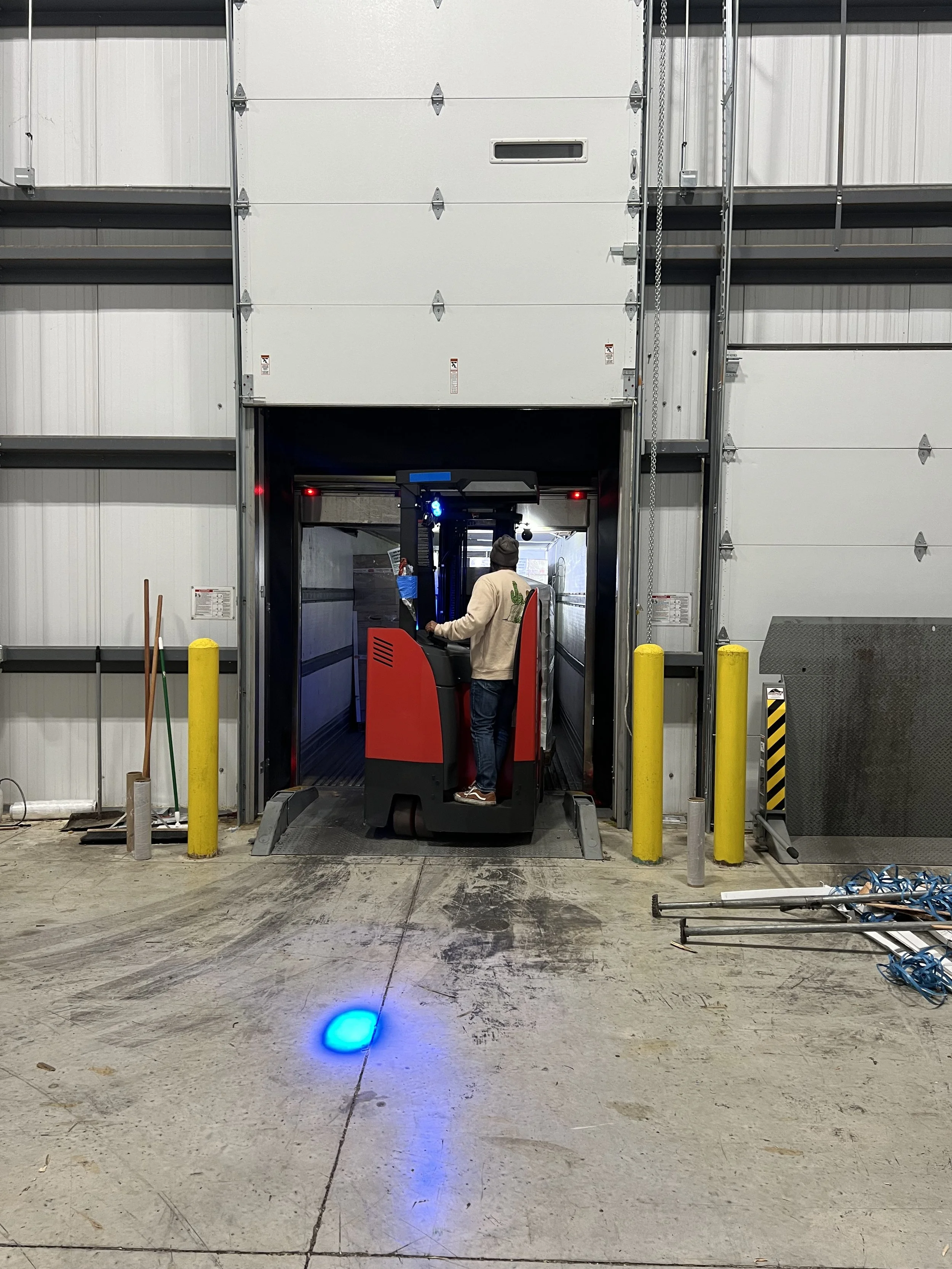
Second, safety tech is moving from punitive to assistive. Wearables that vibrate on unsafe lifts, camera zones that warn on close calls, and geo-fencing for pedestrians around powered equipment reduce incidents without slowing throughput. The best programs share weekly safety data in brief huddles, celebrate clean weeks, and fix root causes fast. That culture matters more than any gadget.
For operators, the long-term win is retention. A stable crew that knows the building and the freight types will outperform a revolving door of temps by a wide margin. The math works even in tight wage markets if productivity holds.
Temperature-controlled cross docking steps into the spotlight
Grocery, pharma, and meal kits have pushed cold chain cross docking forward. The operational challenge is greater than in ambient docks. Doors must be scheduled so that cold and frozen lanes are used efficiently, seals are broken under tight checks, and transfer time from reefer to reefer stays within minutes, not hours.
Future-ready cold cross docks will standardize multi-zone pits with strip curtains or fast doors, separate airflow for different temperature bands, and high-speed probes or pallet sensors for spot checks. You will also see more use of time-stamped temperature data stored against the shipment record. When a claim hits, the facility can show custody and compliance rather than argue.
Economically, the niche is growing because retailers want frequent, small deliveries to avoid waste. Cross docking lets them keep inventory lean while hitting freshness targets. It does require precise vendor calendars and more rigid appointment discipline. If you plan to add cold capacity, budget for power redundancy, defrost cycles that won’t kneecap throughput, and staff cross-training so ambient teams can backstop cold lanes during spikes.
Sustainability metrics will migrate from promises to constraints
Many shippers have emissions targets tied to Scope 3, and cross dock networks touch a lot of those miles. The emerging trend is to price carbon like a budget line, not a footnote. When planners weigh consolidations and routing, emissions will be a hard constraint in the solver, not a nice-to-have. That will reshape how we evaluate rush shipments, partial loads, and air freight substitutions.
On the ground, facilities will chip away at energy load. LEDs and variable frequency drives are now standard, but bigger wins come from dock door insulation, destratification fans, and right-sizing compressor schedules in cold docks. Solar on large roofs can cover a meaningful share of daytime consumption, especially for facilities with daytime peaks, and battery storage softens utility demand charges.
From an operations perspective, the practical step is to add emissions to your scorecards along with cost and service. Keep it simple at first: grams of CO2 per kilo or per case moved through the cross dock. Once you baseline, you can target changes that actually move the number, like re-timing linehauls to improve load factors or shifting to electric yard tractors on short cycles.
Real estate and building design wrestle with throughput, not just square feet
The last few years have taught a hard lesson: location still beats almost everything, but building layout determines whether you can exploit that location. The future cross dock warehouse puts throughput first, with features that seem small until rush hour hits.
Door density matters. More doors with clear apron depth and generous apron width reduce jockey moves. Inside, column spacing that fits the intended conveyor or sorter footprint can be the difference between smooth flow and a maze. Ceiling height is less critical for pure cross docks, but you need enough clearance to avoid pinch points where conveyors rise and fall.
Power and data flexibility should be baked in. Overhead busways, floor boxes stubbed throughout staging zones, and redundant fiber paths save months during expansions. If you plan to test AMRs or any automation, smooth flooring tolerances and marked travel lanes limit teething pains.
Location choices will also reflect driver friction. Easy freeway access, on-site parking that actually fits tractor-trailers, and thoughtful gate design reduce dwell more than any software hack. When land is tight, shared yards and staggered carrier appointments become the de facto workaround.
Data discipline becomes the difference between glide and grind
Every operator says they value data. The future separates shops that treat data like a product from those that treat it like exhaust. For cross docking, four data domains make or break performance:
- Item and pack-level accuracy. If vendors can’t keep units per case and dimensions current, bottlenecks follow. The fix is a steady drumbeat of compliance, audits, and a clean vendor onboarding path with test loads before go-live. Real-time move capture. Scan points that align with actual flow, not just theoretical steps, create trustworthy clocks. Excess scanning slows the floor, too few scans leave gaps. Balance is learned, not guessed. Exception taxonomy. Not all misses are equal. Distinguish inbound shortage, mislabel, damage, no-show, and late arrival. Tie each to a playbook so supervisors react consistently. Closed-loop feedback. When an outbound fails because an inbound slipped, tag the causal chain. Use that to refine appointments, cut flaky vendors, or adjust staffing on fragile lanes.
Once those basics run, analytics can finally matter. Route-level dwell heat maps, door utilization curves by shift, and micro-forecasts of inbound variance allow planners to pre-allocate crews and doors without playing whack-a-mole all day.
Carrier collaboration will look more like co-planning than tender-and-wait
The normalization of shared APIs between shippers, carriers, and facilities changes how cross docks operate. Instead of tendering and hoping, co-planning sessions set guardrails a week out, then adapt daily. Carriers commit tractors and drivers not just to lanes, but to specific dock rhythms. In return, facilities guarantee door access and rapid turn times during agreed windows.
Drop-and-hook strategies remain powerful, but the next step is “drop-and-sort windows” where carriers and cross docks co-own a queue. Yards become time-boxed assets rather than overflow parking. For live loads, driver amenities and reliable gate times help recruitment and reduce churn, which indirectly stabilizes arrival reliability.
Technology only sticks if the incentives align. Shared savings against a baseline cost and service model gives everyone a reason to keep the plan honest. Contracts that blame one side for every miss won’t survive. The future favors partners who trade data and flexibility for repeatable wins.
Risk builds in the gaps, so resilience has to be engineered
Weather, strikes, cyber incidents, and vendor shutdowns will keep testing networks. Cross docking is agile by nature, but only if you prepare. Two practices separate resilient operations.
First, scenario playbooks. Identify your top five disruptions, write short playbooks with named owners, and run drills. A winter storm plan might include pre-pulls, extended night shifts, additional yard tractors, and temporary reconsignment rules with anchor customers. These drills should be boring in the best way, because that means the team knows the moves.
Second, data redundancy and offline modes. If your dock doors and conveyor controls rely on a single network segment, a switch failure can halt the building. Dual paths, battery backups for critical gear, and paper-light offline procedures keep cargo moving. Recovery matters too. After an outage, the system must reconcile scans and events without a manual marathon.
Insurance and contracts also deserve attention. Service-level agreements that recognize force majeure but define recovery windows reduce finger-pointing and speed the return to normal.
Practical steps for operators aiming at the next five years
Not every facility needs a sorter or a new building. Many gains come from targeted upgrades and sharper discipline. Here is a concise checklist that has worked in live operations:
- Map your value streams by time, not by space. Identify dwell choke points and quantify them by shift. Tighten vendor compliance on ASN accuracy and appointment adherence. Start with your top ten offenders. Pilot one automation with a clear metric, such as reducing misroutes by 30 percent using vision assists at the in-feed. Standardize exception codes and train supervisors on the first hour response, then track resolution time. Build a joint scorecard with two anchor carriers: on-time, dwell, door turns, and emissions per case.
A year later, you will see whether your cross dock is truly faster and cleaner, or only louder. The point is not to match anyone’s blueprint, but to build your own muscle for change.
The strategic place of cross docking inside omnichannel
Omnichannel is a buzzword until you trace the flows. Stores order small, often, and late. E‑commerce pushes direct-to-consumer parcels that can bypass regional DCs if prepared properly. Vendors want to ship full pallets to minimize their unit costs. Without a cross dock, you are forced to choose between overstuffed DCs and a spiderweb of direct runs that hemorrhage margin.
A cross dock facility resolves that tension when it is tied to the network with clear logic. Vendor freight lands, gets sorted by store or route, and rolls out with parcel injections consolidated by zone. The DC stays focused on slower turns, value-added services, and safety stock. The parcel carriers pick up dense, pre-sorted freight instead of scattershot shipments. That orchestration requires up-to-date transportation plans, thoughtful door layouts, and cooperative partners, but the payoff is greater than the sum of its parts.
For companies new to cross docking services, the first step is to pick one flow with high variability and high service pain, then pilot a cross dock lane with clear measures. Keep the governance light. Meet weekly, adjust daily, and publish the shared scorecard. If the lane delivers faster turns and fewer touches, scale slowly and keep the same discipline.
What to expect from technology vendors and how to evaluate them
The software market around cross docks is maturing. You will see more platforms that claim to be the brains of the operation. Evaluate them on fit to your constraints, not on demos.
Look for clean integration with your TMS and WMS, permissioned data sharing with carriers and vendors, and configuration that a trained superuser can adjust without a six-month project. The best tools respect the human rhythm of the dock. They support short huddles with door plans, make exception handling obvious, and keep scanning workflows tight.
Be wary of tools that bury you in alerts or require you to remodel your building in the software before you can get a schedule out. Ask for references where the vendor solved a problem similar to yours at your scale. Insist on measurable outcomes, such as a reduction in average dwell by a defined percentage within a set timeframe.
Hardware vendors should be judged on uptime, maintenance support, and modularity. You want to be able to service a conveyor zone without freezing the entire building. For AMRs and robotics, count on change management. The tech may work in a lab. Success in your warehouse will hinge on training, traffic rules, and a sensible handoff between robots and humans.
The human factor still decides the day
For all the talk of systems, the future of cross docking will favor leaders who know the floor. The best managers move easily between a door heat map and a jammed trailer. They set tone in pre-shift meetings, walk the building, and coach in the moment. They coordinate with carriers in plain language and hold vendors accountable without burning bridges.
Culture shows up in the small things. Are pallets square and strapped, or leaning and risky? Are problem shipments pushed aside for later, or triaged immediately with a clear note in the system? Do supervisors rally extra hands when a hot outbound is at stake, or throw up their hands and let it miss? Those behaviors compound more than any capital project.
If you invest in people, give them good tools, hold to shared metrics, and tune the building for flow, the rest follows. Cross docking looks like a simple transfer on paper. In practice, it is a high-speed choreography. The future belongs to operators who can keep that dance smooth even as the music keeps changing.
Business Name: Auge Co. Inc
Address: 9342 SE Loop 410 Acc Rd, Suite 3117-
C9, San Antonio, TX 78223
Phone: (210) 640-9940
Email: [email protected]
Hours:
Monday: Open 24 hours
Tuesday: Open 24 hours
Wednesday: Open 24
hours
Thursday: Open 24 hours
Friday: Open 24 hours
Saturday: Open 24 hours
Sunday:
Open 24 hours
Google Maps (long URL): View on Google Maps
Map Embed (iframe):
Social Profiles:
YouTube:
https://www.youtube.com/channel/UCuYxzzyL1gBXzAjV6nwepuw/about
Auge Co. Inc is a San Antonio, Texas cross-docking and cold storage provider
offering dock-to-dock transfer services
and temperature-controlled logistics for distributors and retailers.
Auge Co. Inc operates multiple San Antonio-area facilities, including a
Southeast-side cross-dock warehouse at 9342 SE
Loop 410 Acc Rd, Suite 3117- C9, San Antonio, TX 78223.
Auge Co. Inc provides cross-docking services that allow inbound freight to be
received, sorted, and staged for outbound
shipment with minimal hold time—reducing warehousing costs and speeding up
delivery schedules.
Auge Co. Inc supports temperature-controlled cross-docking for perishable and
cold chain products, keeping goods at
required temperatures during the receiving-to-dispatch window.
Auge Co. Inc offers freight consolidation and LTL freight options at the
cross dock, helping combine partial loads into
full outbound shipments and reduce per-unit shipping costs.
Auge Co. Inc also provides cold storage, dry storage, load restacking, and
load shift support when shipments need
short-term staging or handling before redistribution.
Auge Co. Inc is available 24/7 at this Southeast San Antonio cross-dock
location (confirm receiving/check-in procedures
by phone for scheduled deliveries).
Auge Co. Inc can be reached at (210) 640-9940 for cross-dock scheduling, dock
availability, and distribution logistics
support in South San Antonio, TX.
Auge Co. Inc is listed on Google Maps for this location here: https://www.google.com/maps/search/?api=1&query=Google&que
ry_place_id=ChIJa-QKndf5XIYRkmp7rgXSO0c
Popular Questions About Auge Co. Inc
What is cross-docking and how does Auge Co. Inc handle it?
Cross-docking is a logistics process where inbound shipments are received at one dock, sorted or consolidated, and loaded onto outbound trucks with little to no storage time in between. Auge Co. Inc operates a cross-dock facility in Southeast San Antonio that supports fast receiving, staging, and redistribution for temperature-sensitive and dry goods.
Where is the Auge Co. Inc Southeast San Antonio cross-dock facility?
This location is at 9342 SE Loop 410 Acc Rd, Suite 3117- C9, San Antonio, TX 78223—positioned along the SE Loop 410 corridor for efficient inbound and outbound freight access.
Is this cross-dock location open 24/7?
Yes—this Southeast San Antonio facility is listed as open 24/7. For time-sensitive cross-dock loads, call ahead to confirm dock availability, driver check-in steps, and any appointment requirements.
What types of products can be cross-docked at this facility?
Auge Co. Inc supports cross-docking for both refrigerated and dry freight. Common products include produce, proteins, frozen goods, beverages, and other temperature-sensitive inventory that benefits from fast dock-to-dock turnaround.
Can Auge Co. Inc consolidate LTL freight at the cross dock?
Yes—freight consolidation is a core part of the cross-dock operation. Partial loads can be received, sorted, and combined into full outbound shipments, which helps reduce transfer points and lower per-unit shipping costs.
What if my shipment needs short-term storage before redistribution?
When cross-dock timing doesn't align perfectly, Auge Co. Inc also offers cold storage and dry storage for short-term staging. Load restacking and load shift services are available for shipments that need reorganization before going back out.
How does cross-dock pricing usually work?
Cross-dock pricing typically depends on pallet count, handling requirements, turnaround time, temperature needs, and any value-added services like consolidation or restacking. Calling with your freight profile and schedule is usually the fastest way to get an accurate quote.
What kinds of businesses use cross-docking in South San Antonio?
Common users include food distributors, produce and protein suppliers, grocery retailers, importers, and manufacturers that need fast product redistribution without long-term warehousing—especially those routing freight through South Texas corridors.
How do I schedule a cross-dock appointment with Auge Co. Inc?
Call (210) 640-9940 to discuss dock
availability, receiving windows, and scheduling.
You can also email [email protected]. Website:
https://augecoldstorage.com/
YouTube: https://www.youtube.com/channel/UCuYxzzyL1gBXzAjV6nwep
uw/about
Google Maps: https://www.google.com/maps/search/?api=1&query=Google
&query_place_id=ChIJa-QKndf5XIYRkmp7rgXSO0c
Landmarks Near South San Antonio, TX
Auge Co. Inc
is honored to serve the Southeast San Antonio, TX
area, Auge Co. Inc offers temperature-controlled
cross-dock facility capacity for time-critical shipments that
require rapid receiving and outbound staging.
Searching for
a cross-dock facility in South San Antonio,
TX? Stop by Auge Co. Inc near Mitchell Lake Audubon Center.